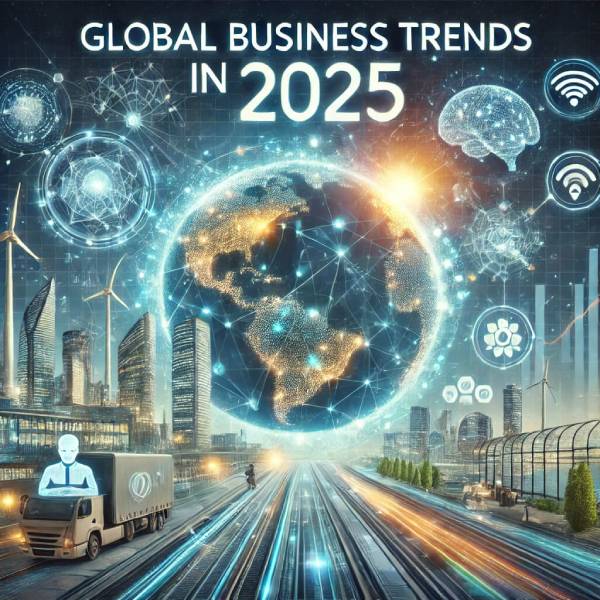
The speed of digital transformation has not slowed down. From how businesses function and how people interact with all around them, technology continues to reshape the entirety of modern life. Some of these changes have been developing for years and are currently reaching the point of critical mass, whereas some have made an appearance quickly and took entire industries by surprise. Whether you're in tech or simply reside in a society that is increasingly shaped by it, knowing where the trends are going to lead you to an advantage. Here are the ten digital technology trends that are the most significant for 2026/27 to 2028 and beyond.
1. Artificial Intelligence Changes From Tool to TeammateAI has graduated from being simply a technology that is a way to be more integrated. Through all industries, AI platforms now function as active participants rather than inactive assistants. When developing software, AI develops and reviews code together with engineers. In healthcare settings, AI identifies diagnoses that human eyes could miss. In marketing, content production also legal assistance, AI deals with first drafts and regular analysis so that human professionals can focus to higher-order reasoning. The transition is less about replacement and more about redefining what human work is when the repetitive layer is automated.
2. The Growth Of Agentic AI SystemsA step up from standard AI assistants and agents, agentic AI refers to systems capable of planning and carrying out multi-step actions autonomously. Rather than responding to a single request the systems break down complex objectives, come up with the right course of action utilize various tools and data sources, then carry through without constant human input. For companies, this translates to AI that can handle workflows and research, create notifications, and keep systems up to date without supervision. For people who use it every day, it implies digital assistants that can accomplish things rather than simply answering questions.
3. Quantum Computing Enters Practical TerritoryQuantum computing has spent years languishing in the midst of theoretical promise. But that is changing. While quantum computers for all purposes remain a work in progress in the meantime, specific systems are beginning to demonstrate significant advantages when it comes to drug discovery and materials sciences, logistics optimization and financial modeling. Big technology companies and governments are investing more heavily into new quantum systems, and the race to achieve meaningful commercial advantage has been growing. Businesses who are watching now are better off once the technology has matured.
4. Spatial Computing as well as Mixed Reality Expand Their FootprintAfter the launch of commercially available top-of-the-line mixed reality headsets spatial computing is finding applications far beyond entertainment and gaming. Architectural firms employ it to conduct deep review of designs. Specialists learn complex procedures in virtual environments. Remote teams meet in virtual spaces that are shared in three dimensions. As the hardware gets lighter and more affordable, spatial computing is expected to be an established method of how digital information is obtained to be accessed, navigated, and then acted on both in professional and daily contexts.
5. Edge Computing Brings Processing Closer to the sourceCloud computing revolutionized what was possible due to centralizing processing power. Edge computing is now decentralising it again and with good reason. It processes information close to where it is generated, whether at a factory floor, a hospital ward, or inside the vehicle's connected system edge computing decreases delay, improves reliability and reduces bandwidth demands of constant cloud communications. For any application where real time response is not an option, from autonomous vehicles, industrial automation to smart city infrastructure, edge is becoming essential.
6. Cybersecurity Evolves Into A Continuous DisciplineThe threat world has gotten too big and complicated for the old model of periodic audits and reactive patching. In 2026/27, organizations that are serious consider cybersecurity as a continual organization-wide discipline, not just being a departmental concern for IT. Zero-trust, which implies that every system and user is trustworthy in default, is becoming standard practice. AI-driven tools monitor networks in real-time, and can spot anomalies before they are able to become breaches. Humans are the most vulnerable vulnerability, which makes security training and culture equally important as any technical solution.
7. Hyperautomation Joins The Dots Between SystemsHyperautomation uses a mixture of AI machines, machine learning and robotic process automation in order to discover the workflows that need to be automated rather than just isolated tasks. In contrast to simple automation, it concentrates on the connective tissue between systems that previously required humans to coordinate and eliminates friction completely. Banking and insurance companies in supply chain and banking to public administration as well as public services are discovering that the use of hyperautomation goes beyond just reduce costs but also fundamentally alters the kind of services an organization is capable of delivering with speed.
8. Green Tech And Sustainable Digital InfrastructureThe environmental cost associated with digital infrastructure is under more investigation. Data centers use huge amounts of electricity, and the increase in AI training workloads has pushed that use to a much higher level. As a result, the industry continues to invest more energy-efficient equipment, renewable powered facilities, system for cooling with liquids, as well as smarter approaches to managing workloads. For companies that have ESG commitments the carbon footprint of its technology infrastructure is not something that should disappear into the background.
9. The Democratisation Of Software DevelopmentAI-powered no-code and low-code platforms allow software development within easy reach for those without a professional programming experience. Natural interfaces to languages and visual development environments make it possible for domain experts to build functional software which automate complicated processes and integrate data systems, without being dependent on third party developers. The pool of experts capable of creating digital solutions is increasing rapidly and the effects on business agility and advancement are profound.
10. Digital Identity And Data Sovereignty In the CenterAs the pace of digitalization increases concerns about who holds personal information and the method of verifying identity online are becoming more central than peripheral concerns. Identity frameworks with decentralisation, privacy-preserving technologies, and greater data portability rights are all being embraced. Platforms and governments alike are pushing towards models that give individuals more genuine control over their digital identities, as well a clearer view of the way their personal data is utilized. The direction is set, however, the route remains undetermined.
The trends discussed above aren't only isolated changes. These trends feed and speed up one another and create a digital landscape that is developing faster than at any previous point in the past. The need to stay informed is no longer only useful to technologists. In a digital world controlled by digital technology, it's more important for every person. For additional insight, browse the most trusted landsortstidningen.se/ to learn more.
 Top 10 Social Media Trends Shaping Society In The Years Ahead
Social media has become embedded in the fabric of everyday life that distancing its influence from other aspects of culture is becoming increasingly difficult. It has an impact on how people form opinions, establish identities to consume entertainment, monitor the news, form relationships and take part in public life. The social media platforms themselves continue to change quickly, driven by competition, regulations, and the relentless demands to keep human attention. The 2026/27 era is a global social media environment that is more fragmented greater AI-driven, as well as more important than at any other period. Here are the top 10 social media trends that will shape culture to 2026/27.
1. AI-Generated Content The Floods Every PlatformThe quantity of AI-generated content across popular social media websites has risen to an amount that is fundamentally altering the digital landscape. Photos, videos, written posts, and entire accounts that generate content in machine speed are an everyday feature on each major platform. There are a variety of implications from generally benign, AI-powered authors producing more content more efficiently however, the really corrosive synthetic misinformation, fake personas, and fake consensus operating at a scale that human moderates are not able to keep pace with. The ability to distinguish human-generated and AI-generated content is becoming both a technical challenge and a valuable cultural skill.
2. Short-Form Video Remains Dominant But EvolvesShort-form videos established itself as the predominant format for content in this time, and the dominance continues into 2026/27. What can be changing is how sophisticated of both the content and the viewers that consume it. Creators are creating more sophisticated formats within the confines watch this video of the short-form and people are showing an increasing demand for more substantive content that makes use of the format intelligently rather than simply optimizing for the initial three seconds of their attention. The platforms themselves are testing with larger formats and more engaging mechanics to try for ways to transcend scroll and provide the type of continuous time-on-platform that can translate into commercial value.
3. The Economy of the Creator Matures and stratifiesThe economy of the creator has morphed into a large economic sector however, the distribution of rewards has been increasingly uneven. A small portion of creators at the top of the attention economy earn large amounts of income, while the large middle-tier struggle in converting audience into sustainable revenue. Changes in platform algorithms, resulting in content saturation, and the difficulty of standing out in an environment where AI can replicate surface-level content at no cost are making it more difficult for competitors to compete on middle-tier creators. The most resilient business models for creators in 2026/27 will be those that are built around genuine community, a unique perspective, as well as direct monetisation models that decrease dependence on algorithms of platforms.
4. Alternative Platforms and Decentralised Platforms Gain GroundThe frustration with major centralised platforms, driven by worries about algorithmic manipulation security, data privacy, non-conformity in moderation, and concentration of power by a select amount of tech companies is fuelling the growth of alternative social platforms that are decentralised. Federated social networks built on an open network, specialist community platforms catering to specific niche groups and subscriber-based models that align incentives for platforms to user value instead of advertiser requirements are all reaching out to audiences. These platforms are still able to enjoy massive scaling advantages, yet their ecosystems are growing in a meaningful way more diverse.
5. Social Commerce is now a primary shopping ChannelThe integration of online commerce directly into feeds on social media or live streams as well as creator content has produced a shopping behaviour shift that is especially evident among younger demographics. Social commerce, in which users are able to discover the products and making purchases without leaving an account, is growing quickly across every major social channel. Live shopping experiences, a trend that was pioneered in Asia and now growing globally are combining retail and entertainment by combining them in ways that lead to high performance in terms of conversion and engagement. For companies, the influencer connection has evolved from awareness campaigns into an direct sales channel that comes with quantifiable revenue attribution.
6. Raw Content And Authenticity Resist PolishA counterreaction to years of professionally produced and edited social media content is making people hungry for rawness the spontaneity of life, as well as visible imperfections. Artists who have unfiltered moments in which they express genuine uncertainty and lives that appear familiar and authentic rather than aspirationally impossible are enjoying a thriving audience which polished content struggles to connect with. This isn't an outright disdain for quality but rather changing the definition of what "quality" is in the current context of authenticity itself is becoming a kind of competitive advantage. The fact that authenticity in its raw form could be as carefully constructed as other formats for content will not be lost on the more self-aware nooks of the internet.
7. Mental Health And Platform Design In the face of greater ScrutinyThe link between social media use and health issues, especially with regard to young people, continues to generate significant research, attention from regulators, and public debate. Age verification requirements, screen time tools, algorithmic transparency obligations, and restrictions on certain recommendations for content are all currently being implemented or considered across the major jurisdictions. The design decisions of platforms that exploit the psychological vulnerabilities of users to boost participation are being scrutinized, which has begun to bring about real change in the manner that products are developed and managed. The distinction between what platforms actually know about the consequences of their design decisions as well as what they publish publicly is still a point of disagreement.
8. Communities and Interest-based Spaces Become More Important In ImportanceAs the broad public grid model for social media where everybody posts to everyone on everything, has been exposed for its limitations in terms radiation, polarisation and excessive noise. Smaller and more specifically-focused community spaces are increasing in popularity. These include subreddits and servers for Discord, Substack communities or private chats and niche forums based around particular types of interests or identities are where many people are finding the online connection and conversation they're no longer expecting from the general-purpose platforms. The change is in line with a broad appreciation that the scale which gives platforms their power also creates a difficult environment in which to create genuine communities.
9. Political And News Content Faces Platform RetreatA variety of social media platforms are taking deliberate measures to reduce the prominence of news and political information in the algorithmic recommendation in light of the toxic and moderate burden it generates relative to the user experience. This has implications for political discourse media, journalism, and political communication are both significant and controversial. If news organizations have constructed distribution strategies around online referrals, the retreat represents a serious challenge. For political actors who have a habit of using social platforms as direct communication channels, it is leading to a change in digital strategy. The bigger question of what importance social media platforms will play in democratic information ecosystems remains deeply unresolved.
10. Digital Identity and Online Reputation Grow into Long-Term AssetsThe building of an online presence over decades or years is becoming something people manage with increasing deliberateness. Digital identity, which is the total of what a person has published, shared, constructed and maintained across platforms, carries real-world implications for relationships, careers and opportunities. These were not understood at the time when social media was just beginning to be introduced. The management of online reputations with regards to sharing and how to curate it, the right way to delete it, and how to build a steady and trustworthy online presence over time, is becoming an essential skill for every day life rather than a matter reserved for professionals and public figures in media-related positions. The persistence and searchability of online content mean that decisions made without thinking will be seen again in a different one with consequences that are difficult to anticipate.
The social media landscape in 2026/27 is much more powerful, more litigated, and more consequential than any other time in its short history. These trends indicate an environment in flux, at a time when rules regarding engagement are renegotiated by regulators, platforms, makers, and users all at once. To navigate this well, whether you're individuals, businesses, or a society, requires a greater degree of critical sensitivity than the utopian beginnings of social media that were necessary. For additional information, check out some of these reliable paivanfokus.fi/ and find trusted analysis.